

One of the most important questions a homebuyer can ask isn't, “How much can I get approved for?” It's “Can I actually afford the payment?”
I've been in mortgages for more than 25 years, and I don't believe a lender's maximum approval should determine your personal budget. I want you to be able to own the house and enjoy your life.
Rates change, but don't count on a refinance
Interest rates change daily. Yes, every single day. Inflation expectations, bond markets, economic news, investor demand, loan programs, credit, down payment and property type can all affect your quote. Today's rate environment won't last forever in exactly the same form, but nobody can promise rates will be lower next year.
I strongly disagree with telling buyers, “Just buy now and refinance later,” as though that's a plan. Refinancing requires qualifying again. Rates may not improve. Your home value, income, credit and available programs may change. There are costs to refinance too. Buy based on a payment you can live with under today's loan terms.
Your Real Payment Is More Than Principal and Interest
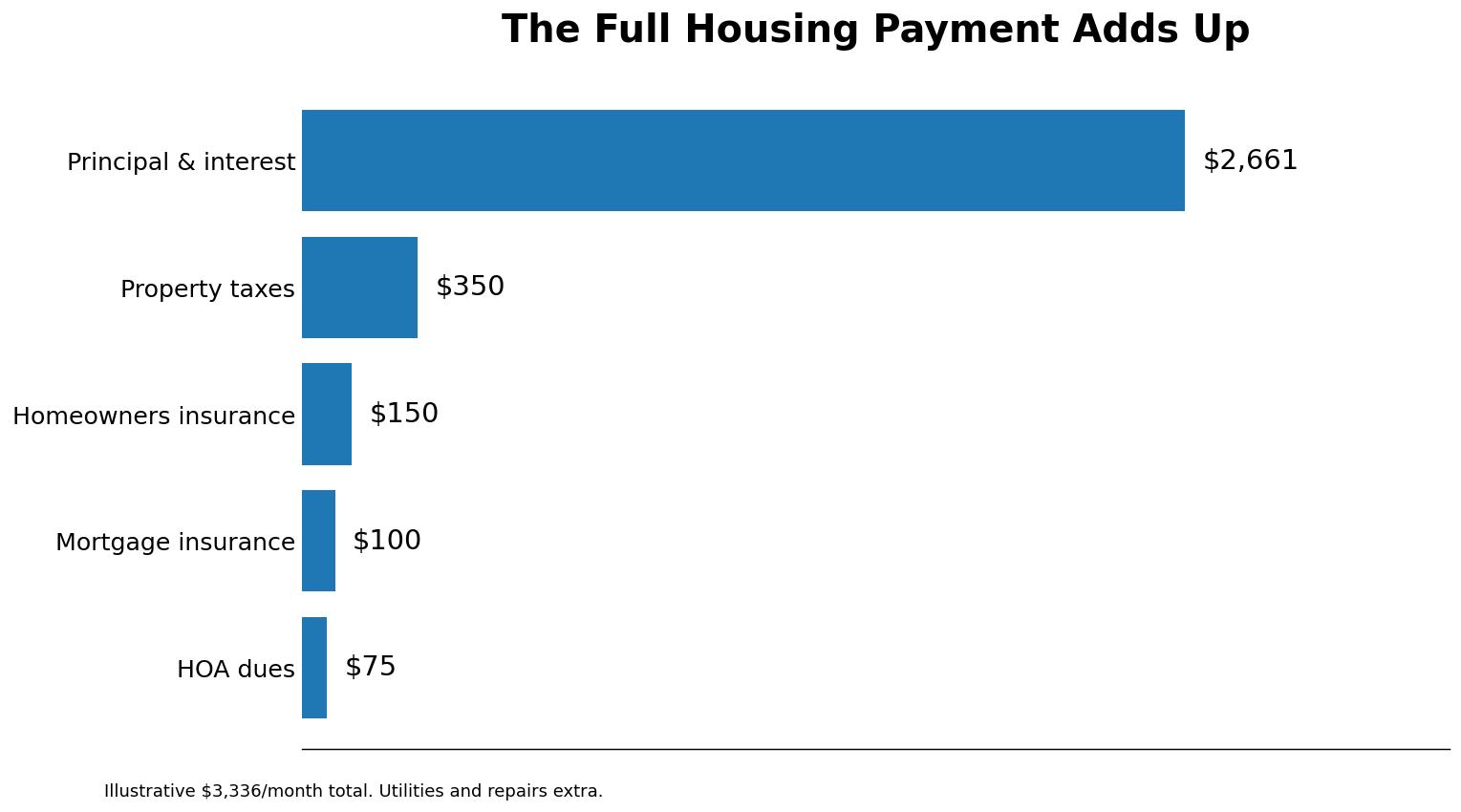
A hypothetical $400,000 mortgage at 7% for 30 years has the loan payment before taxes and insurance of approximately $2,661 per month. But your actual housing budget may also include property taxes, homeowners insurance, mortgage insurance, HOA dues, utilities and maintenance. Insurance and taxes can rise. Repairs don't wait for a convenient month.
| Example monthly housing cost | Amount |
|---|---|
| Principal and interest | $2,661 |
| Property taxes | $350 |
| Homeowners insurance | $150 |
| Mortgage insurance | $100 |
| HOA | $75 |
| Total | $3,336 |
Ask yourself: After housing, can I still save, handle emergencies, pay my other bills and do the things that matter to my family? What happens if one income drops or a big repair hits?
What About Temporary Mortgage Rate Buydowns?
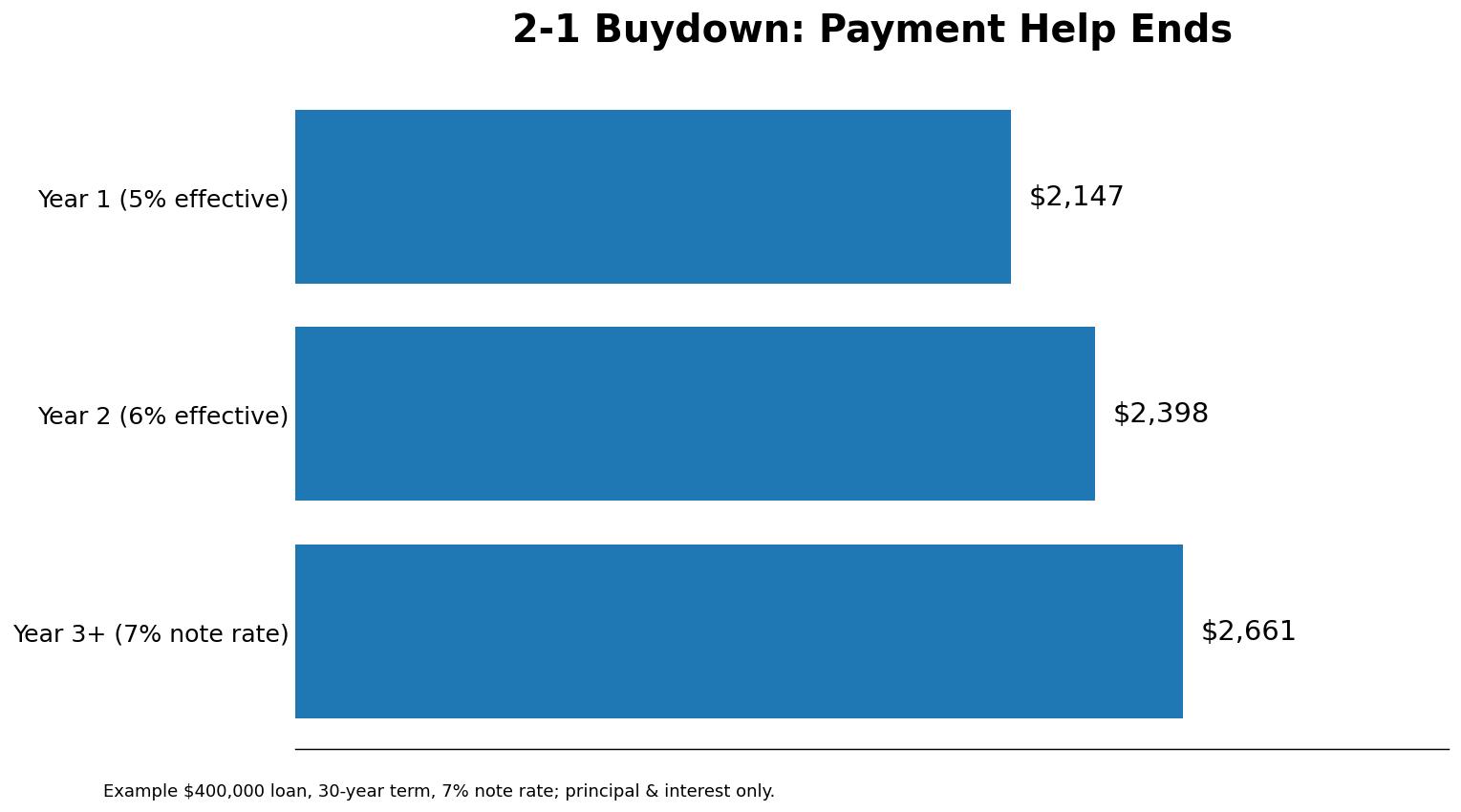
A 2-1 temporary buydown generally subsidizes the payment for the first two years: an effective rate two percentage points below the note rate in year one and one point below in year two, then the full note-rate payment. The note rate itself hasn't changed. The temporary payment help runs out. Program restrictions apply, and qualification generally uses the full note rate.
A temporary buydown can be helpful when the full payment already fits your budget. It should never be used to convince you to buy a home you can only afford during the introductory period.
A temporary buydown funded by a seller, builder, or lender generally places funds in a special account at closing to cover the difference between the reduced payment you make and the full payment required by the mortgage. It can provide thousands of dollars in payment relief during the initial period, but only makes sense if you can afford the full payment once the help ends.
What can we do instead?
We can explore a lower purchase price, a different down payment, eligible seller concessions, a permanent rate buydown, an adjustable-rate mortgage, or an eligible FHA or VA assumption. Each has costs, eligibility requirements and trade-offs. For an ARM, understand how and when the rate can change. For an assumption, understand the difference between the price and the seller’s mortgage balance and any second mortgage. For points, calculate how long it takes to recover the upfront cost.
Sometimes the best option is a smaller house. Sometimes it's taking six months to strengthen savings or pay down debt. And sometimes, yes, the answer is to wait.
You deserve people willing to tell you “not yet”
Your lender and your real estate agent should care whether you're comfortable with the decision, not just whether a transaction closes. They should be willing to explain the risks, show multiple scenarios and respect a decision to walk away.
I'd rather tell a client to wait than watch them struggle with a payment they were never comfortable making.
If you're looking to buy in Fredericksburg, Stafford County or Northern Virginia, let's compare the real monthly payments and build a strategy that works for your life. No pressure and no promises about future rates.
Common Questions
Should I wait for rates to fall? Nobody knows when rates will fall. Buy only when the payment works now.
Can I refinance later? Maybe, but never count on it. Future rates and approval are not guaranteed.